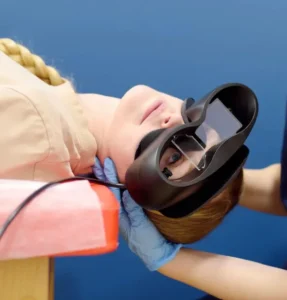
Did you wake up this morning feeling like the ceiling was collapsing on you? Or perhaps while sipping your coffee, the ground suddenly seemed to slide out from under your feet? This sensation is more than just a simple “dizziness”; it is a serious signal from your body’s balance center.
Commonly referred to as vertigo, this condition is not a disease itself, but rather a symptom of a disruption in your equilibrium system. For those searching for answers—especially patients looking for an Antalya Vertigo Center—the most urgent question is: “What should I do during an attack?”

Here are 5 golden rules to help you find your balance in the middle of the storm:
1. Ground Yourself Immediately
When a vertigo attack begins, your brain sends a “we are falling” signal. The safest way to counteract this is to lower your center of gravity immediately.
- What to do: Sit or lie down in a safe spot right away.
- Pro Tip: When lying down, use two pillows to prop your head up at a 45-degree angle. This helps balance the fluid pressure in the inner ear.
2. Don’t Close Your Eyes; Focus on a Fixed Point
Many people close their eyes out of panic, but this can cause the brain to completely lose its sense of “position.”
- The Solution: Fix your gaze on a stationary, non-moving object (like a painting or a clock) in front of you. This “visual anchor” sends a message to your brain saying, “Everything is okay; we aren’t spinning.”
3. Switch to “Slow Motion” Mode
Sudden head movements during an attack can cause inner ear crystals (if they are the culprit) to displace even further. If you follow the advice of experts at the Akdeniz Vertigo Center, you will see that the most important rule is slowness. Move like an astronaut—extremely slowly—when turning your head or standing up.
4. Step Away from the Digital World (Sensory Detox)
Bright phone screens, television lights, and loud music are all extra data that your brain has to process.
- Dim the lights in the room.
- Turn off all screens.
- Allow your nervous system to calm down in a quiet environment.
5. Pay Attention to Hydration
Dehydration directly affects the fluid balance in the inner ear. Once you feel the attack beginning to subside, start drinking water in small, slow sips. Staying hydrated can help reduce the severity of future episodes.
When Should You Consult a Specialist? (Red Flags)
Not every vertigo attack can be managed with rest at home. If your dizziness is accompanied by the following symptoms, you should seek professional help without delay:
- Slurred speech or double vision.
- Sudden loss of strength in arms or legs.
- A severe headache unlike any you’ve felt before.
- Tinnitus (ringing in the ears) or sudden hearing loss.
In such cases, applying to specialized units like the Antalya Vertigo Center—one of the most well-equipped facilities in the region—or the Akdeniz Vertigo Center for modern diagnostic methods is the right step toward a permanent solution.
Remember: Vertigo is a manageable condition. Panic triggers symptoms; staying calm accelerates recovery.