If you are struggling with dizziness (vertigo), your biggest challenge is likely not getting a clear answer to the question, “What is wrong with me?” Vertigo is not a disease in itself, but a symptom. One of the most advanced methods used to identify the root cause of this symptom is the VNG (Videonystagmography) test.
So, what exactly is this test that unravels the mystery behind dizziness?
What is a VNG Test?
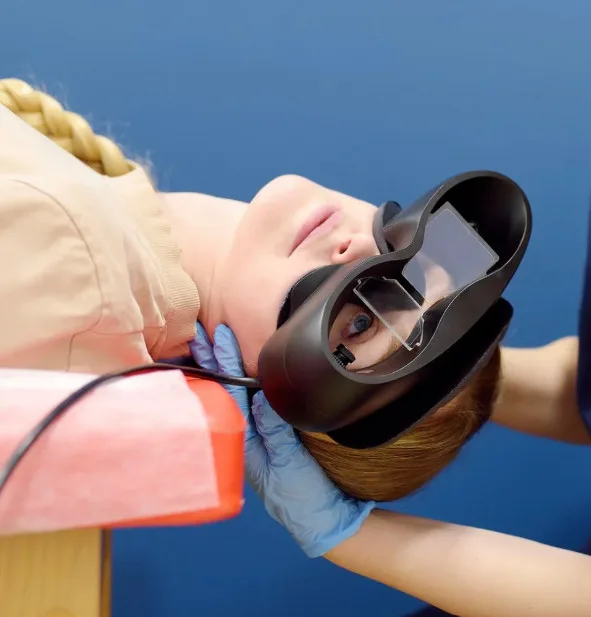
The VNG test is a high-tech diagnostic method that analyzes how the inner ear and the balance centers in the brain function. During the test, the patient wears special goggles equipped with sensitive cameras. These cameras track your eye movements (nystagmus) in minute detail and transfer the data to a computer.
Since our eyes and our balance system are intrinsically linked, even the slightest deviation in your eye movements clearly indicates to the experts at the Antalya Vertigo Center whether the source of the problem lies within the inner ear or the nervous system.
How is a VNG Test Performed?
The VNG test is a completely painless and non-surgical procedure. It generally consists of three main parts:
- Visual Tests: The response of the eyes is measured by tracking moving lights.
- Positional Tests: Eye movements are recorded as your head and body are moved into different positions.
- Caloric Tests: The balance system is stimulated by introducing mild air or water into the ear canal.
Why Should You Have a VNG Test?
Success in vertigo treatment depends on an accurate diagnosis. Thanks to the VNG tests performed within the Akdeniz Vertigo Center, you benefit from:
- Precision: Determining whether your vertigo is caused by crystals in the inner ear (BPPV) or another underlying issue.
- Efficiency: Avoiding unnecessary medication usage.
- Customization: Developing the most accurate, patient-specific treatment and rehabilitation plan.
What to Keep in Mind Before the Test
To ensure the most accurate results from your VNG test, some preparations are necessary:
- Medication: Drugs that suppress dizziness or have a sedative effect should be discontinued at least 48 hours before the test (under physician supervision).
- Makeup: To ensure the cameras around your eyes can track movements without interference, please avoid wearing eye makeup.
- Fasting: Since a slight sensation of nausea may occur during the procedure, it is recommended to avoid heavy meals 3–4 hours before the test.
The Right Address for Professional Balance Analysis
Don’t let dizziness limit your life. As the Antalya Vertigo Center, we are here to help you regain your balance with our state-of-the-art VNG, vHIT, VEMP, and VR equipment, supported by our experienced audiology team. By receiving service at Akdeniz Vertigo Center standards for vertigo diagnosis and treatment, you can take a confident step toward your health.